
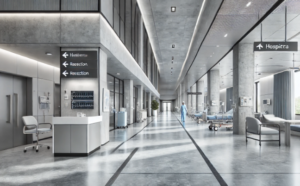
Palm Beach, Florida hospitals run on precision. Every corridor, patient room, procedure area, loading bay, and service hallway has a job to do, all day and all night. In a coastal climate with constant humidity, heavy foot traffic, rolling equipment, aggressive cleaning routines, and strict safety expectations, the floor is never “just a floor.” It is part of the infection-prevention environment, part of fall-risk reduction, and part of operational continuity.
Hiring a Concrete Coating Palm Beach company is a practical facilities decision that supports patient safety, reduces maintenance chaos, and helps a hospital keep critical spaces looking and performing the way they should. A properly specified coating system can turn porous, staining, dusting concrete into a sealed, durable, cleanable, and safer surface that holds up under hospital reality.
Why Hospital Floors Are a Patient-Safety Asset, Not a Cosmetic Choice
Hospitals focus relentlessly on reducing harm and improving outcomes, including lowering infection risk and preventing falls. National organizations track patient safety performance and infection reductions as a measurable priority, not a marketing concept.
Concrete floors, especially older slabs, can shed dust, absorb liquids, and degrade into micro-pits that are harder to fully clean. A professional coating system helps by sealing the surface and creating a consistent finish that tolerates frequent disinfection and scrubbing without rapidly breaking down. This supports the broader goal of keeping healthcare environments cleaner and more controlled, which aligns with the continued emphasis on preventing healthcare-associated infections.
For context, healthcare-associated infections remain a serious and widely monitored issue across healthcare systems. And hospital-acquired infections have long been recognized as a patient safety and public health problem. Hospital-acquired infection (Wikipedia)
Palm Beach Conditions Demand More From Floors
Palm Beach facilities deal with environmental stressors that accelerate wear:
Salt air can increase corrosion and maintenance demands in adjacent building components, and moisture intrusion is a constant concern.
Humidity can slow drying times after cleaning and intensify slip risk if surfaces are not designed for traction.
High visitor volume, transport routes, and rolling loads from beds and carts punish weak surfaces quickly.
A local Concrete Coating Palm Beach company understands how Florida moisture and daily hospital use interact with concrete and coating systems. That local familiarity matters when selecting primers, moisture mitigation approaches, and topcoats that can withstand both climate and cleaning expectations.
Infection Prevention Supports Cleanability and Surface Integrity 🧼
Hospitals rely on evidence-based infection prevention and control practices, and the physical environment plays a meaningful supporting role. Organizations like the CDC and WHO publish extensive guidance and updates highlighting the importance of infection prevention and control in healthcare settings. CDC Healthcare-Associated Infections (HAIs) and WHO Infection Prevention and Control updates reinforce how central IPC is to safer care.
A coated concrete surface does not replace hand hygiene or clinical protocols, and it should never be marketed as a medical intervention. What it does provide is a sealed, non-dusting, easier-to-clean substrate that holds up better under routine environmental services. That can reduce the constant battle with staining, absorbed spills, and degraded concrete texture that can trap grime and complicate cleaning consistency.
Slip Resistance and Safer Movement for Patients and Staff 👣
Hospitals move people who are unsteady, medicated, recovering from anesthesia, or using mobility aids. They also move staff members at speed, pushing carts and beds through hallways and thresholds. Floors that polish, dust, or become slick after repeated mopping create avoidable risk.
A professional coating contractor can design a system that balances cleanability with traction, using appropriate aggregate and topcoat selection for each zone. The correct approach is area-specific, because an ICU corridor, a public lobby, a kitchen, and an ambulance bay do not share the same demands. Done well, coatings reduce slip risk while still allowing effective daily cleaning and disinfection.
Resistance to Harsh Cleaning Chemicals and Frequent Disinfection
Hospitals clean relentlessly. Many facilities use strong disinfectants, repeated dwell times, and frequent mechanical scrubbing. Some surfaces look great on day one and fail fast under chemical exposure, leaving peeling, whitening, or roughened areas that then become harder to maintain.
A seasoned concrete coating company evaluates cleaning protocols and selects systems built for chemical resistance and abrasion performance. That is especially valuable in:
Emergency department corridors
Surgical support areas and sterile processing adjacencies
Labs and imaging back-of-house routes
Soiled utility and trash routes
Food service and dietary corridors
This is also where having a contractor experienced in healthcare standards matters. It reduces the trial-and-error that leads to premature failures and rework.
Dust Control and Asset Protection for Sensitive Areas
Bare concrete can “dust,” especially in older service corridors, mechanical rooms, and back-of-house pathways. That dust can migrate into equipment areas and increase housekeeping burden. Coatings lock down the surface, helping reduce concrete dusting and making routine cleaning more effective.
This kind of improvement supports broader safety culture goals and quality improvement initiatives hospitals publicly emphasize. CMS Hospital Quality Initiative reflects the ongoing emphasis on measurable quality and transparency, and durable facility choices help support the operational side of those outcomes.
Faster Turnaround and Less Operational Disruption
Hospitals cannot pause operations for long. A concrete coating company that understands healthcare scheduling can phase work intelligently:
Nights and weekends for public corridors
Sequenced closures for back-of-house routes
Rapid-cure options for time-sensitive areas
Clear containment and odor-control practices
The goal is to complete projects with minimal disruption to patient care, staff movement, and emergency readiness. A local Palm Beach contractor is also positioned to respond quickly if schedules shift due to census changes, storm preparation, or urgent facility needs.
Compliance, Documentation, and Risk Management Value
Hospitals live in documentation. A coating project that includes proper surface prep records, product data, and maintenance recommendations supports facilities compliance and reduces finger-pointing later. It also helps risk managers and facilities leaders prove that flooring improvements were planned and executed with safety and durability in mind.
Healthcare safety organizations regularly highlight that patient safety is multifactorial, involving processes, people, and environments. A hospital that invests in robust, cleanable, durable floors is investing in the environment component of safer care.
Where Coatings Make the Biggest Difference in a Palm Beach Hospital
A strong coating plan targets high-impact zones first:
Emergency and transport routes
These routes see constant rolling loads and fast movement, making durability and traction critical.
Loading docks and service corridors
They take heavy equipment, pallet jacks, and constant grime. Coatings reduce staining, dust, and deterioration.
Parking garages and covered entries
Palm Beach rain, humidity, and tracked-in sand can create slip hazards and degrade concrete, especially at transitions.
Mechanical rooms and utility spaces
Sealing helps control dusting and improves housekeeping efficiency.
Public-facing lobbies and clinics
Appearance matters, but so does cleanability and long-term wear under visitors, wheelchairs, and carts.
A Smarter Facilities Investment With a Clear Operational Payoff
Hospitals invest in upgrades that reduce friction, reduce rework, and support safe care delivery. Concrete coatings fit that category when they are specified correctly and installed by professionals who understand healthcare demands.
With rising attention on infection prevention, patient safety outcomes, and facility performance, the built environment remains a meaningful support system for clinical excellence. Resources from the CDC and WHO reinforce the ongoing importance of infection prevention in healthcare settings, while U.S. agencies and hospital organizations continue to emphasize measurable safety and quality improvement. CDC Newsroom, NIH News Releases, and FDA Press Announcements reflect how consistently public health and healthcare safety stay in the spotlight.
Conclusion ✅
A Palm Beach hospital hires a Concrete Coating Palm Beach company for results that are practical and protective: sealed and cleanable floors that stand up to hospital-grade cleaning, improved traction and reduced dusting, stronger durability under rolling loads, and a more controlled environment in a demanding coastal climate. This is the kind of facilities upgrade that quietly improves daily operations while supporting the hospital’s broader commitment to safety, cleanliness, and dependable patient care.